
Branding strategy: what it is and how it works
Branding strategy isn't about having a nice logo. It's deciding what your brand means and how it's perceived.
Neste artigo
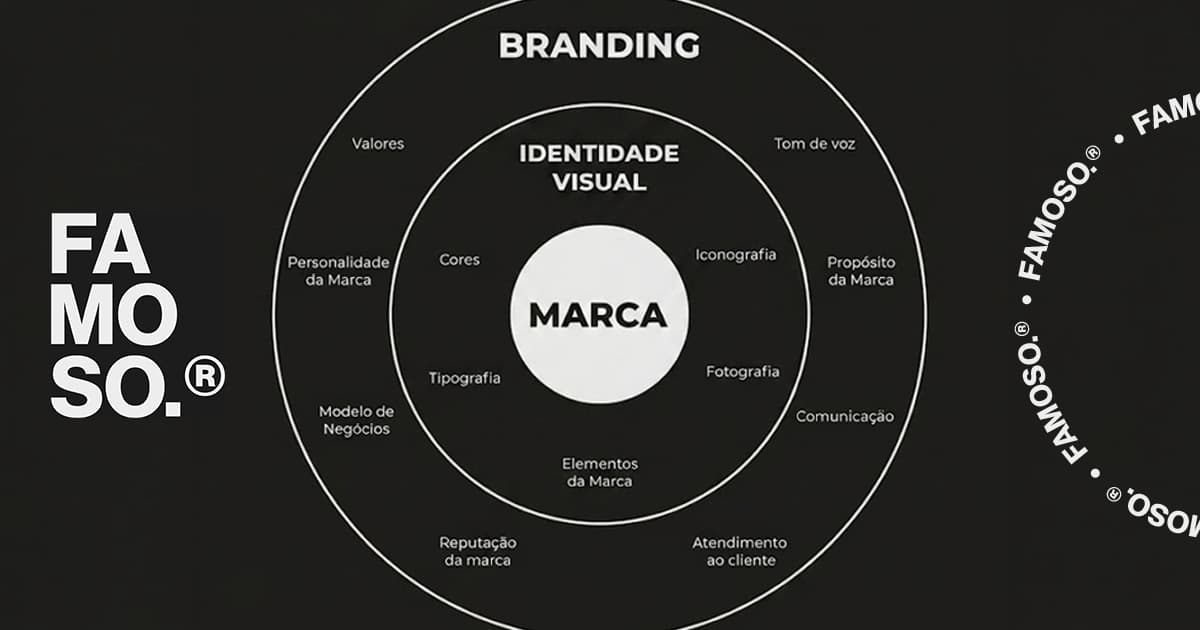
Most companies have a brand. Few have a branding strategy.
The difference between the two appears at the moment of sale. One negotiates price. The other doesn't need to.
What branding strategy is
Branding strategy is the set of decisions that defines what your brand means, who it exists for, how it positions itself in the market, and what it wants to make people feel.
It's not the logo. It's not the color palette. It's not the Instagram feed.
Those are the expression of the strategy. Not the strategy itself.
Brand without strategy is just appearance. Appearance without positioning doesn't sell. Doesn't justify price. Doesn't create preference.
Why branding strategy matters for businesses
Because it determines how much you charge and who looks for you.
Companies with well-built strategic branding attract clients who arrive qualified, without needing to negotiate every real. They charge higher prices for the same level of delivery. They generate more consistent referrals because the perception is clear. They compete less on price because the difference is perceived before the conversation.
Branding isn't a marketing cost. It's revenue infrastructure.
The five elements of branding strategy
- →Purpose. Why your brand exists beyond generating profit. It doesn't need to be grandiose. It needs to be true and relevant to who you serve. Purpose guides decisions. When you know why you exist, it's easier to decide what to accept, what to refuse, what to communicate.
- →Positioning. The place your brand occupies in the client's mind relative to competitors. Positioning isn't a slogan. It's a strategic position in the market. It's the answer to: why would someone choose you over another? Without clear positioning, the market's default response is to compare prices.
- →Target audience. Who your brand was built for. Not 'everyone who needs design' or 'companies from any sector'. The more specific, the more powerful the positioning. Niche doesn't limit. It specifies. And what is specific is perceived as specialist.
- →Brand personality. How your brand behaves. What its human characteristics are. What differentiates it in the way it acts, speaks, and presents solutions. Brands with a strong personality create connection. Connection creates preference. Preference eliminates price comparison.
- →Brand promise. What you consistently deliver. Not what you technically do, but what the client gains by working with you. Brand promise is what you can guarantee every time, for any client, on any project.
How to apply branding strategy in practice
The strategic work comes before the visual.
Before choosing typography, before defining a palette, before creating a logo, you need clarity on the five elements above.
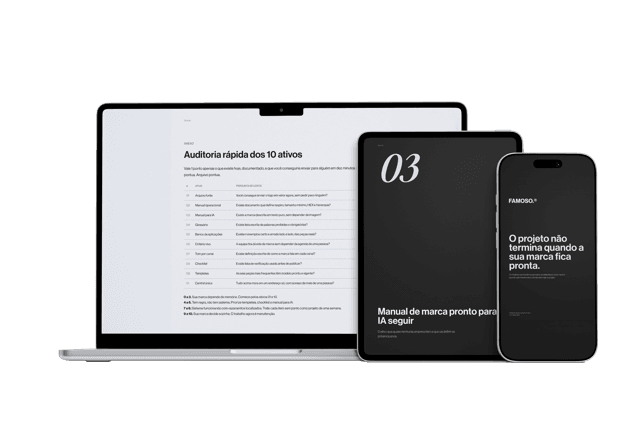
Material gratuito
E se a pessoa que criou sua marca sumisse amanhã?
Os 10 ativos que garantem que sua marca continue consistente, com ou sem quem a desenvolveu.
With the strategy defined, the visual work becomes simpler. You're not choosing what's beautiful. You're choosing what represents.
Day-to-day, branding strategy means refusing clients who don't fit the positioning. Pricing based on value, not hours. Communicating with consistent tone and language. Appearing where your ideal client is. Saying no to projects that contradict what your brand represents.
Strategic branding for small businesses
There's a myth that strategic branding is for big brands with multinational budgets.
It's not.
Small companies that work with strategic branding have a direct competitive advantage. Especially in markets where competitors still compete on price.
A small business with clear positioning and coherent identity looks bigger, more trustworthy, and more specialized than a larger business without these definitions.
Perception isn't proportional to size. It's proportional to consistency.
The mistake that invalidates any branding strategy
Defining the strategy and not applying it.
Branding strategy doesn't exist in a PowerPoint presentation. It exists in the real client touchpoints. On the website. In the proposal. In the post. In the email. In the way you charge. In the way you present yourself.
Any inconsistency between what the brand says it is and what it demonstrates to be destroys the credibility of the positioning.
If you don't yet have a clear branding strategy, your brand is being positioned by the market. And the market will position it where it's easiest: as just another option.
Perguntas frequentes
What is branding strategy, and how is it different from having a logo?
Branding strategy is the set of decisions that defines what your brand means, who it exists for, how it positions itself, and what it wants people to feel. The logo, palette, and Instagram feed are expressions of that strategy, not the strategy itself.
What are the core elements of a branding strategy?
Five elements: purpose, positioning, target audience, brand personality, and brand promise.
Is branding strategy only worth it for large companies with big budgets?
No. Small companies with well-built strategic branding get a direct competitive advantage, especially in markets where competitors still compete only on price.
Why is branding described as revenue infrastructure instead of a marketing expense?
Because companies with strategic branding attract more qualified clients without negotiating every price, charge more for the same delivery, and generate more consistent referrals since the perception is clear.
Material gratuito
E se a pessoa que criou sua marca sumisse amanhã?
Os 10 ativos que garantem que sua marca continue consistente, com ou sem quem a desenvolveu.
Ferramenta gratuita
Diagnóstico de marca
Responda o scorecard e receba o score da sua marca com uma leitura direta do resultado.
Fazer diagnóstico →
R$97
Agente FAMOSO.®
O processo que uso pra criar posts com tese, não conteúdo genérico. Acesso permanente.
Conhecer o agente →Leia também
- What brand positioning is (and why it costs you)Brand positioning isn't a slogan. It's the position your company occupies in the client's mind before any conversation. And it defines the price you can charge.
- Brand equity: why your brand may be worth moreBrand equity is the value your brand adds beyond the product itself. Understand how it affects price, preference, and growth.
- Brand architecture: what it is and why it mattersBrand architecture defines how a business's products, services, and brands relate to each other. Understand when it matters and how wrong decisions are costly.
Escrito por Pedro Cardoso, fundador do FAMOSO.®, estúdio de branding em Porto Alegre.
← Ver todos os artigosDiagnóstico FAMOSO.®
Você não vende o que faz. Vende o que parece que faz.
Análise completa da sua marca mais uma call de 30 minutos. O valor vira crédito integral no projeto.
CONHECER O DIAGNÓSTICO