
Number 10 jersey: what it means in football
The number 10 was not born special. Pelé, Maradona, Zico and Messi stacked meaning onto it for decades. Where the weight of the 10 actually comes from.
Neste artigo
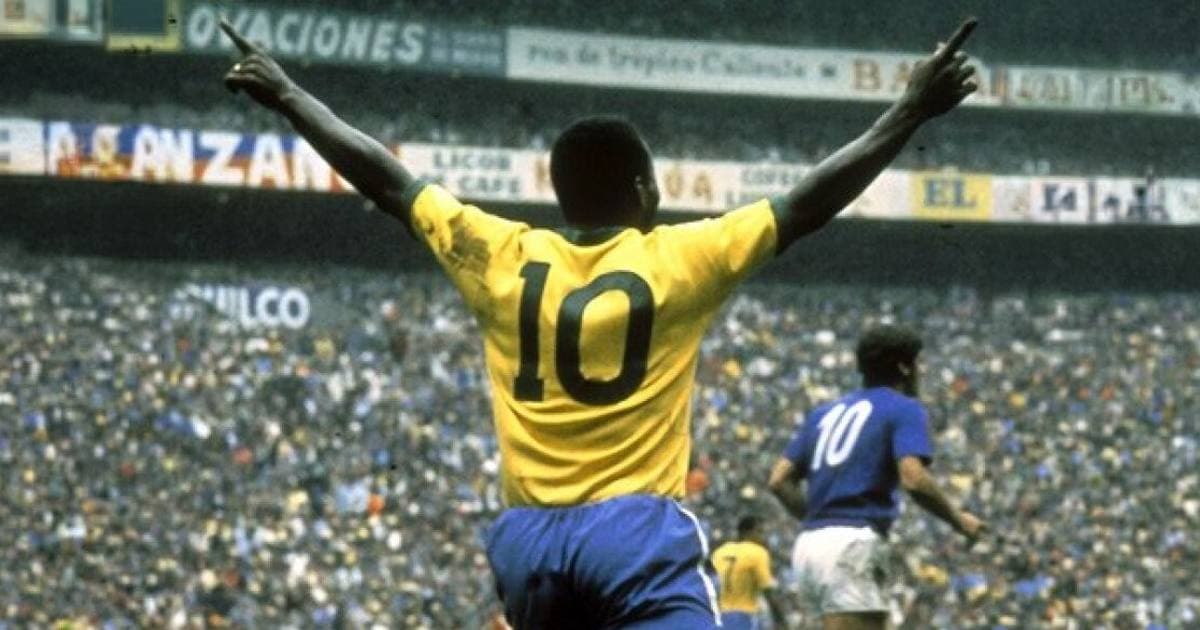
In soccer, the number 10 jersey isn't just a number on the back. It comes with weight: it's the star's jersey, the team's brain, the one who carries the responsibility of deciding. Pelé, Maradona, Zico, Platini, Ronaldinho, Messi, Neymar. The list of who wore the 10 is practically the list of the greatest. And here lies a question that matters far beyond sport: how did a plain numeral become one of the most meaning-loaded symbols in the world.
The answer explains something essential about visual identity and brand: symbols aren't born valuable, they become valuable.
A number means nothing on its own
The 10 has no magic property. It's the number between 9 and 11. There's nothing in the shape of the digit that carries creativity, leadership, or genius. If team numbering had gone differently way back, the star player today might wear the 7, and the 10 would be just another fullback's number.
What happened was accumulation. Over decades, the most decisive players happened to wear the 10, and each generation stacked more meaning onto the number. Pelé gave it weight, Maradona multiplied it, and with every star who inherited the number, the association grew stronger. The 10 became what it became not by design, but by repeated association over time.
That's exactly how any brand symbol earns value. The sign itself is an empty vessel. What fills it is the story attached to it.
The symbol is the vessel, the story is the content
It's worth bringing this into brand territory. A logo, on the day it's drawn, means nothing. The apple, the Nike swoosh, the golden arches: at launch, they were just shapes. The meaning they carry today was deposited over years of product, experience, and consistency. The logo didn't create the value, it stored the value the brand kept building.
Material gratuito
E se a pessoa que criou sua marca sumisse amanhã?
Os 10 ativos que garantem que sua marca continue consistente, com ou sem quem a desenvolveu.
This dismantles a common mistake. A lot of people think a symbol's power lives in the brilliance of the drawing, and so they freeze waiting for the perfect idea, or pay fortunes for a logo that "means everything." But the drawing is just the start. An average symbol used consistently for ten years is worth more than a brilliant symbol swapped every two. What gives a sign its strength is time and repetition, not the initial cleverness. It's worth understanding the difference between the logo and the brand it represents, so you don't mistake the vessel for the content.
Why consistency is the engine
If a symbol's value comes from accumulated association, then consistency isn't aesthetic perfectionism, it's the mechanism that makes the accumulation happen. Every time the 10 shows up on a star's back, the association reinforces. Every time a logo shows up the same way, in the same place, with the same pattern, it deposits a bit more recognition into the brand's account.
Breaking consistency sabotages that deposit. A brand that changes identity every two years never lets the symbol accumulate meaning. It's like swapping the star player's number every season: nobody ever associates anything with any number. The recognition that lets a brand be identified at a glance, and lets it charge for that, only exists if the symbol is kept long enough to become memory.
What this teaches a brand
The number 10 jersey is the most popular proof of a principle that applies to any visual identity. A symbol's value is built, not drawn. It's born from repeated association between the sign and a worthwhile experience, sustained over time.
For anyone building a brand, that shifts the priority. Less energy chasing the perfect symbol at launch, more energy using a good symbol with absolute discipline, year after year, until it becomes shorthand for everything the brand represents. That's the accumulation that turns any shape into an asset, the same way it turned an ordinary number into the most coveted jersey in soccer.
Perguntas frequentes
Why does the number 10 jersey carry so much symbolic weight in soccer?
Not because of anything in the number's design. It's accumulation: over decades, the most decisive players wore the 10, and each generation stacked more meaning onto the number.
Is a brand symbol born valuable?
No. A logo, on the day it's created, means nothing. The meaning gets deposited over years of product, experience, and consistent use.
Is it better to have a brilliant logo or a logo used consistently?
An average symbol used consistently for ten years is worth more than a brilliant symbol swapped every two. What gives a sign its strength is time and repetition, not the cleverness of the original design.
What happens when a brand changes identity frequently?
The symbol never accumulates meaning. It's like swapping the star player's number every season: nobody associates anything with any number, and recognition never forms.
Material gratuito
E se a pessoa que criou sua marca sumisse amanhã?
Os 10 ativos que garantem que sua marca continue consistente, com ou sem quem a desenvolveu.
Ferramenta gratuita
Diagnóstico de marca
Responda o scorecard e receba o score da sua marca com uma leitura direta do resultado.
Fazer diagnóstico →
R$97
Agente FAMOSO.®
O processo que uso pra criar posts com tese, não conteúdo genérico. Acesso permanente.
Conhecer o agente →Leia também
- What is visual identity, really?Visual identity is what makes your brand perceived a specific way before a word is said. Most companies treat it as just the logo.
- Brand equity: why your brand may be worth moreBrand equity is the value your brand adds beyond the product itself. Understand how it affects price, preference, and growth.
- The difference between logo, visual identity, and brandingThree concepts the market uses as synonyms. The confusion that makes companies spend and still have the same problem. Understand all three at once.
- What a visual identity manual actually doesA visual identity manual isn't a file to store. It's the document that ensures your brand remains the same wherever it appears.
- Messi vs. Cristiano Ronaldo: Two Personal BrandsBoth reached the top through opposite paths. One let performance speak, the other ran his image like a company.
Escrito por Pedro Cardoso, fundador do FAMOSO.®, estúdio de branding em Porto Alegre.
← Ver todos os artigosDiagnóstico FAMOSO.®
Você não vende o que faz. Vende o que parece que faz.
Análise completa da sua marca mais uma call de 30 minutos. O valor vira crédito integral no projeto.
CONHECER O DIAGNÓSTICO