
What a visual identity manual actually does
A visual identity manual isn't a file to store. It's the document that ensures your brand remains the same wherever it appears.
Neste artigo
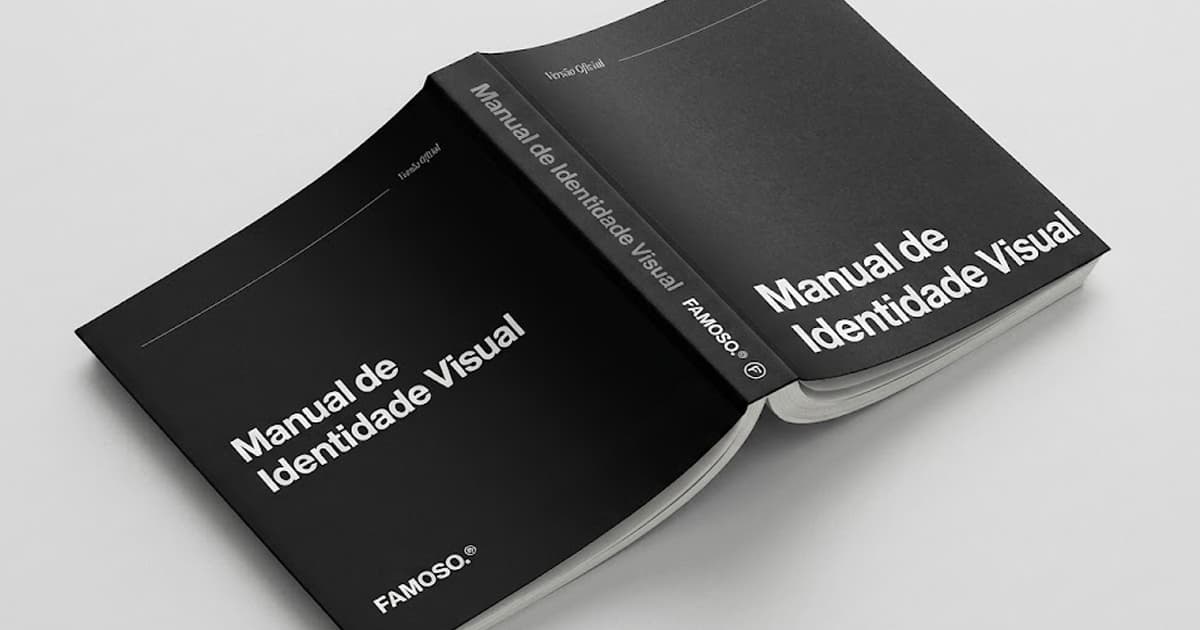
Everyone has heard of a visual identity manual.
Few know what it's really for. And even fewer know what happens when it doesn't exist.
What a visual identity manual is
A visual identity manual is the document that records the brand's rules. How the logo is used, in which versions, at what minimum sizes, on which backgrounds. What the colors are and their exact codes. What the typographies are and how they're applied. What the photographic language, tone of voice, and composition patterns are.
It's the document that ensures your brand remains the same on the business card, on Instagram, on the uniform, on the website, on the packaging, and in the presentation to a new client.
Without it, every application is an interpretation. And accumulated interpretations destroy consistency.
What it's for in practice
The main function of the manual isn't to store reference. It's to keep the brand coherent over time and across different hands.
When you hire a new designer, they don't need to guess how the brand works. When an agency creates a campaign, they have the right parameters. When an employee needs to create a presentation, they know which fonts to use and which not to use.
Without the manual, every professional who touches the brand makes a decision. Some decisions are good. Most aren't. The result is a brand that looks different across channels and loses presence over time.
What a visual identity manual contains
A well-made manual has sections that go from the most basic to the most complex element.
- →Logo and symbol: authorized versions, protection area, minimum size, incorrect uses. This section exists to protect the logo from applications that deform the brand's most visible element.
- →Color palette: primary and secondary colors with codes for each use: CMYK for print, RGB and HEX for digital, Pantone for specific cases. Wrong color is wrong brand.
- →Typography: fonts used, application hierarchy, allowed weights, spacing. Inconsistent typography is one of the fastest signs of visual amateurism.
- →Tone of voice: how the brand speaks. Words it uses and words it avoids. Degree of formality. This element is frequently forgotten in manuals and is one of the most important for maintaining consistency in written communication.
- →Applications: examples of how the brand behaves in real contexts: stationery, digital, signage, uniforms. This section translates rules into practice.
What happens when the manual doesn't exist
The brand loses consistency gradually and silently.
A designer uses the wrong color because they didn't have the exact code. Another uses a similar font because the original wasn't installed. The logo appears stretched in a presentation because nobody knew the correct size. Instagram has a completely different tone of voice than the website.
Each of these mistakes seems small in isolation. Added together, they create a brand that looks unstable, inconsistent, and less professional than the business really is.
And the perception of amateurism costs margin. The client who reaches you with the wrong perception has already arrived asking for a discount.
A manual isn't a luxury for big companies
There's a belief that a visual identity manual is for corporations. That small businesses don't need one.
It's the opposite. Big companies have an entire team to ensure consistency. Small companies don't. The manual is exactly what replaces that structure.
The smaller the operation, the more important it is to have the rules documented. Because every consistency error costs proportionally more.
Perguntas frequentes
Why would a business need a written manual instead of just a logo file?
The manual is the document that records the brand's rules, like how the logo is used and at what sizes, exact color codes, typography application, tone of voice, and how the brand behaves across real applications, so the brand stays the same everywhere it appears.
What goes wrong day-to-day without brand guidelines in place?
A designer uses the wrong color because they didn't have the exact code, another uses a similar font because the original wasn't installed, the logo appears stretched, and the tone of voice differs between channels, all of which add up to a brand that looks less professional than the business really is.
Do small businesses really need a visual identity manual?
Yes, arguably more than big companies. Large companies have a team to keep things consistent; small companies don't, so the manual is what replaces that structure. Every consistency error costs proportionally more for a small operation.
What sections typically appear in a brand style guide?
Logo and symbol usage rules, the color palette with codes for print and digital, typography and hierarchy, tone of voice guidelines, and real application examples like stationery, digital, and signage.
Material gratuito
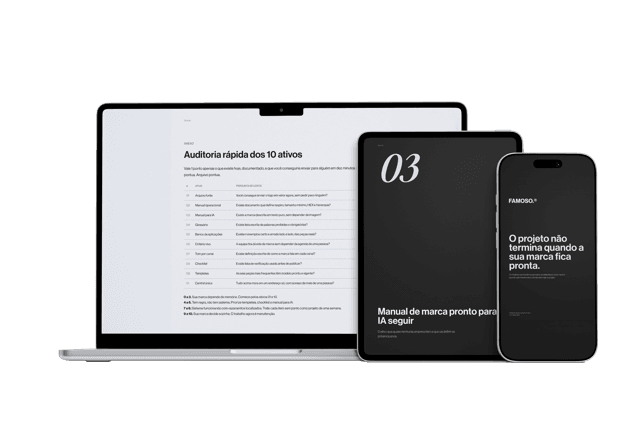
E se a pessoa que criou sua marca sumisse amanhã?
Os 10 ativos que garantem que sua marca continue consistente, com ou sem quem a desenvolveu.
Ferramenta gratuita
Diagnóstico de marca
Responda o scorecard e receba o score da sua marca com uma leitura direta do resultado.
Fazer diagnóstico →
R$97
Agente FAMOSO.®
O processo que uso pra criar posts com tese, não conteúdo genérico. Acesso permanente.
Conhecer o agente →Leia também
- What is visual identity, really?Visual identity is what makes your brand perceived a specific way before a word is said. Most companies treat it as just the logo.
- Brand tone of voice: what it is and how to define yoursBrand tone of voice is your company's personality expressed in words. Understand what it is, why it matters, and how to define yours with clarity.
- The difference between logo, visual identity, and brandingThree concepts the market uses as synonyms. The confusion that makes companies spend and still have the same problem. Understand all three at once.
Escrito por Pedro Cardoso, fundador do FAMOSO.®, estúdio de branding em Porto Alegre.
← Ver todos os artigosDiagnóstico FAMOSO.®
Você não vende o que faz. Vende o que parece que faz.
Análise completa da sua marca mais uma call de 30 minutos. O valor vira crédito integral no projeto.
CONHECER O DIAGNÓSTICO