
Messi vs. Cristiano Ronaldo: Two Personal Brands
Both reached the top through opposite paths. One let performance speak, the other ran his image like a company.
Neste artigo
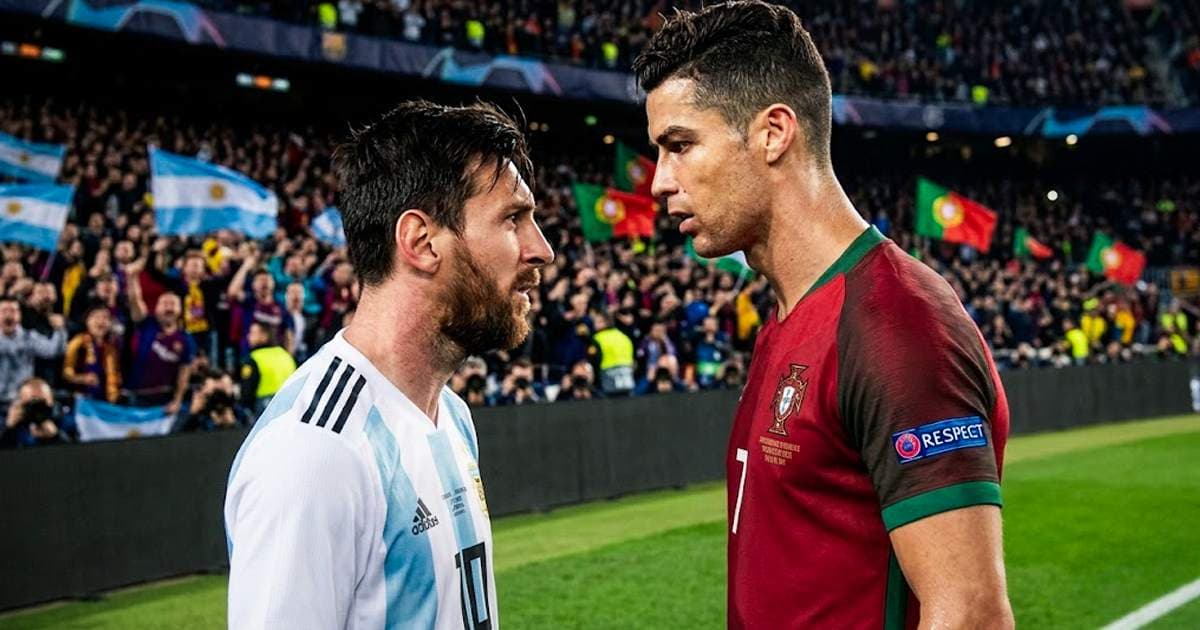
Both played in the same era, won almost everything, and fought over the top spot for fifteen years. Off the pitch, they built personal brands that barely resemble each other. One let performance speak and became a brand as a consequence. The other ran his own image like a company from early on and built an empire separate from football. Looking at the two side by side is a lesson that there's no single right way to build authority.
Two brand architectures
Cristiano Ronaldo is sports' most deliberate brand. He's the most followed person in the world on Instagram, with over 600 million followers, and he uses that reach as his own distribution channel. He has the CR7 brand in underwear, perfume, hotels, and gyms. He opened a museum with his own trophies. In 2024 he launched a YouTube channel and broke the record for the fastest account to hit a million subscribers. His image is a product managed with the same discipline he applies to his body.
Messi built it the opposite way. For years he was nearly invisible off the pitch, with no personal label, no image franchise, with discreet, family-centered communication. His brand grew by osmosis: what he did with the ball was enough. The value kept piling up in his name with no visible operation behind it.
Two routes to the same place. One brand engineered, built piece by piece. One brand earned, formed as a result of the main work.
What each transfer revealed
Both of their 2023 transfers expose the difference. Cristiano went to Al-Nassr, in Saudi Arabia, in a move that combined money with a country's project. His presence gave Saudi football visibility no campaign could have bought, and he arrived as the face of an entire market trying to reposition itself. His brand got hired as much as the player did.
Messi went to Inter Miami, a young MLS club, in a deal that paired salary with a stake in the business. The league closed a streaming deal with Apple, and Messi started getting a share of the revenue from new subscriptions. His jersey became one of the best-selling on the planet within weeks, and attendance at Inter Miami games jumped. He didn't just go play, he transformed the perception of a product that was still chasing relevance.
In both cases, the athlete's name moved the perception of something bigger than himself. That's the underlying thesis of any strong brand: perception comes before price, and whoever controls perception defines how much the market is willing to pay.
Why both work
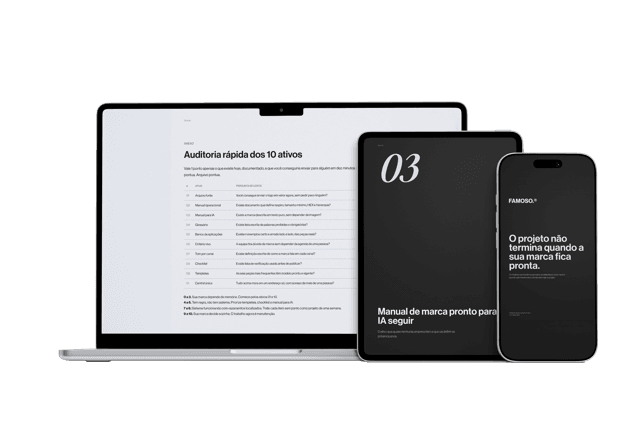
Material gratuito
E se a pessoa que criou sua marca sumisse amanhã?
Os 10 ativos que garantem que sua marca continue consistente, com ou sem quem a desenvolveu.
The temptation is to decide which strategy is the right one. That's not the lesson. Both work because they're coherent with who built them.
Cristiano's empire makes sense because he has always positioned himself as the professional who controls every variable. The engineered brand is the natural extension of that trait. If he had Messi's discreet communication, the whole construction would ring false.
Messi's brand works because discretion is part of what people value in him. The day he set up a loud image operation, the public would feel the noise. The silence is an asset, not a strategy failure.
Coherence is what separates a personal brand from a character. When the built image matches what the person actually is, it holds up for decades. When it doesn't match, it cracks under the first pressure. It's the same logic that applies to the personal brand of any professional who wants authority without vanity.
What a founder takes from this
The comparison matters to anyone building a business because it debunks a common myth: that there's one single formula for building a brand. Some founders build like Cristiano, with deliberate presence, constant content, and an image managed like a product. Some founders build like Messi, letting the work speak and letting the reputation accumulate on its own.
The mistake isn't picking one of the two. The mistake is picking the one that doesn't match you and trying to sustain a borrowed image. An introverted founder forcing himself into a showman act rings as false as an extrovert faking restraint. The authority that makes the market pay more comes from coherence, not from copying someone else's model.
Messi and Cristiano prove you can reach the top through opposite paths. What neither of them did was build a brand that contradicts who he is.
Perguntas frequentes
What's the difference between Cristiano Ronaldo's and Messi's personal brand strategies?
Cristiano ran his own image like a company from early on, with his own brand, a museum, and constant content. Messi built it discreetly, letting his performance on the pitch speak, and the brand grew by osmosis.
Is there one single right way to build a personal brand?
No. Both strategies work because they're coherent with who built them. If Cristiano had Messi's discretion, or vice versa, the construction would ring false.
Why does coherence matter more than the model chosen for a personal brand?
Because when the built image matches what the person actually is, it holds up for decades. When it doesn't match, it cracks under the first pressure.
What mistake should a founder avoid when thinking about their own personal brand?
Copying a model that doesn't fit their profile. An introverted founder forced into a showman act rings as false as an extrovert faking restraint.
Material gratuito
E se a pessoa que criou sua marca sumisse amanhã?
Os 10 ativos que garantem que sua marca continue consistente, com ou sem quem a desenvolveu.
Ferramenta gratuita
Diagnóstico de marca
Responda o scorecard e receba o score da sua marca com uma leitura direta do resultado.
Fazer diagnóstico →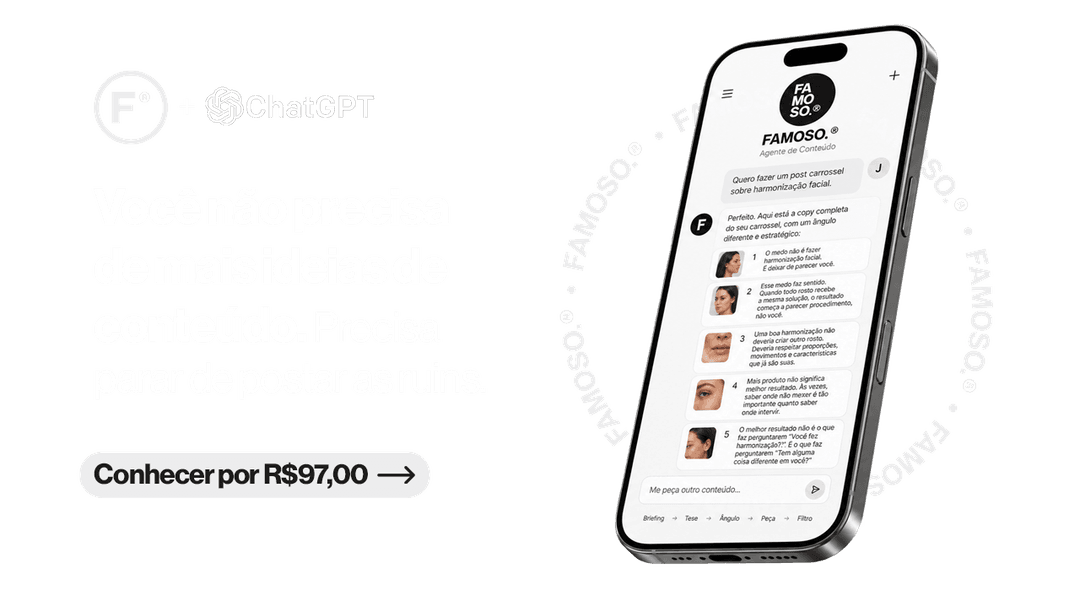
R$97
Agente FAMOSO.®
O processo que uso pra criar posts com tese, não conteúdo genérico. Acesso permanente.
Conhecer o agente →Leia também
- Personal branding: authority isn't vanityA founder who doesn't build a personal brand leaves the perception of their own expertise to chance. Personal branding is a business decision, not vanity.
- How many hours does Haaland sleep? The full routineHaaland sleeps around ten hours a night, eats 6,000 calories a day and tapes his mouth shut. The whole routine, and why repetition became his brand.
- Your Competitor Is Worse and Charges MoreThey deliver less than you, charge more, and sell more. It's not market injustice, it's perception built on purpose, and you can turn the game around.
- Does Investing in Brand Pay Off? How to Measure ItBrand has ROI, but it doesn't show up in the same line item or month you pay for it. Where the return actually shows up.
- Number 10 jersey: what it means in footballThe number 10 was not born special. Pelé, Maradona, Zico and Messi stacked meaning onto it for decades. Where the weight of the 10 actually comes from.
- Ronaldinho's last match: September 2015, FluminenseRonaldinho last played professionally in 2015 and retired in 2018. Eleven years on, the brand is worth around R$600M. What kept paying without the game.
Escrito por Pedro Cardoso, fundador do FAMOSO.®, estúdio de branding em Porto Alegre.
← Ver todos os artigosDiagnóstico FAMOSO.®
Você não vende o que faz. Vende o que parece que faz.
Análise completa da sua marca mais uma call de 30 minutos. O valor vira crédito integral no projeto.
CONHECER O DIAGNÓSTICO