
Is Fiat Brazilian? The answer and what it hides
Fiat is Italian and foreign-controlled. It still leads Brazilian car sales five years running and reads as local. The reason is not price.
Neste artigo
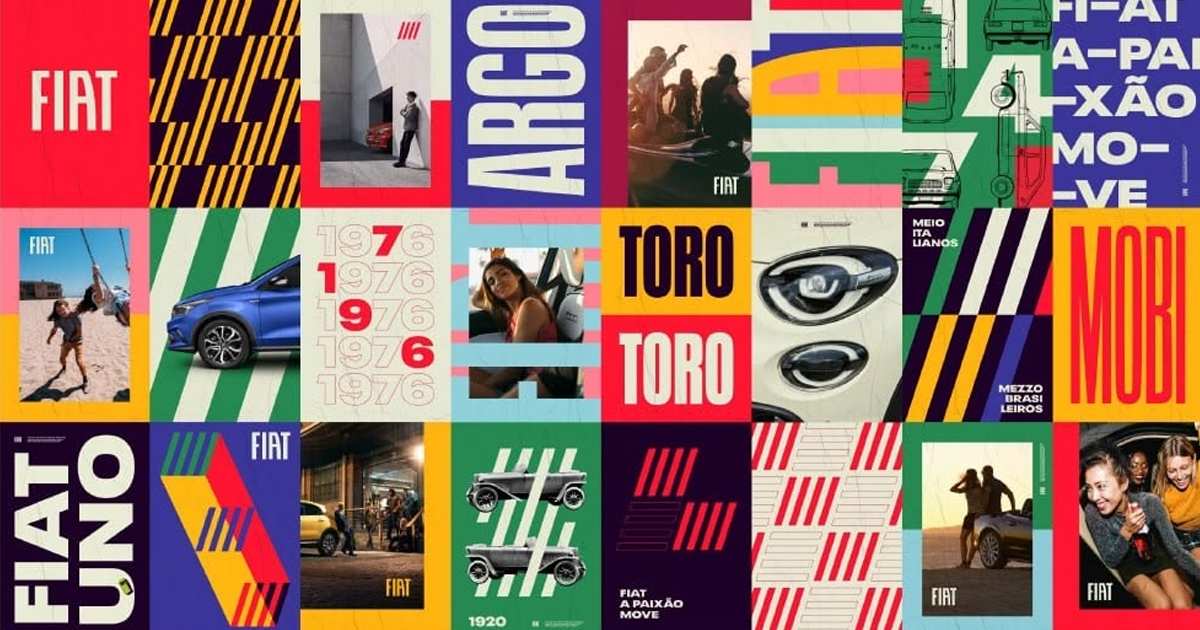
Fiat is an Italian brand, controlled by a group headquartered outside Brazil, with a name nobody tries to localize. Even so, in the first half of 2026 it closed as the absolute leader of the Brazilian market, with nearly 271,000 vehicles registered and 18.9% market share in June. It's the fifth year running in that position.
That's not a lucky pricing table. It's the result of a bet Fiat made 50 years ago that goes against the playbook of every foreign brand: instead of selling distance as prestige, it bet on disappearing into the country.
Betting against the imported-brand playbook
The obvious path for a foreign brand is to sell foreignness as an advantage. Imported becomes synonymous with superior, with quality control, with engineering that "isn't done that way here." That's the script most brands still follow today.
Fiat did the opposite starting in 1976. Instead of importing finished cars, it built a plant in Betim, Minas Gerais, and launched the Fiat 147 as the first economy car manufactured entirely in Brazil. It was also the first Brazilian car with a transverse front engine and the first running on ethanol, technology built for Brazil's energy crisis at the time, not for the European market. The 147 sold more than 536,000 units by 1987.
The decision to manufacture here, to solve a local problem, wasn't just logistics. It was the first layer of a perception that would take decades to crystallize: that of a brand that understands Brazilians before it sells to them.
The Uno Mille and the moment perception flipped
In the 1990s, the Uno Mille beat its direct competitors not because it was cheaper on paper, but because Fiat had already read the Brazilian consumer more precisely than rivals still selling hastily adapted foreign projects. The brand faced real prejudice during that phase, jokes about finishing quality, doubts about durability. But the product kept adjusting to real local use, and perception shifted with it.
That's the point most brands get wrong: they think reputation is bought with a campaign. Fiat built its own product after product, decade after decade, until the gap between "foreign brand" and "national brand" stopped meaning anything to the consumer.
2026: Brazil became Fiat's own biggest market
The most concrete symbol of that reversal is numerical. In 2026, the year the brand marks 50 years in Brazil, the country is Fiat's largest global market, ahead of Italy itself. The campaign celebrating the anniversary sums it up in one line: "Fiat, 50 years a fan of Brazil." This isn't the Italian parent company announcing a presence in an emerging market. It's the subsidiary that became the center.
Material gratuito
E se a pessoa que criou sua marca sumisse amanhã?
Os 10 ativos que garantem que sua marca continue consistente, com ou sem quem a desenvolveu.
Few brands pull off that kind of reversal because most treat the local operation as an extension, never as identity. Fiat treated Brazil as its primary audience, and that audience, decades later, paid it back with market leadership.
The Strada doesn't sell a truck, it sells the working person
The dominance isn't just in total volume. In the pickup truck segment, Fiat closed the half-year with 47.6% share, driven by the Strada, Toro, and Titano. The Strada alone sold more than 83,000 units and opened a lead of nearly 29,000 over the runner-up.
A pickup truck in Brazil isn't a neutral category. It's a work tool for service providers, small business owners, people who need to haul cargo and still use the car on weekends. The Strada was designed for that specific use, not as a resized replica of an American pickup. Buyers aren't choosing the best-looking truck in the category. They're choosing the truck a manufacturer decided to understand before selling.
What this leaves for those who aren't Fiat
No small business has 50 years of factory history to prove it belongs. But the principle behind Fiat's story doesn't depend on scale: brand perception isn't won by claiming to be good, it's won by solving the specific problem of the buyer in a way the generic competitor doesn't.
The number that proves it is the 47.6% share in pickups. Fiat didn't win that number with better advertising. It won because it designed the Strada with a bed, suspension, and proportions built for people who work with the car, not by copying the resized American pickup that competitors sold for decades. A product design decision turned into a 29,000-unit lead over the runner-up. It's the same mechanism that governs visual identity: the brand doesn't convince anyone it understands the customer, it proves it in every visible choice, and perception converts that accumulation into market position.
It's the same logic behind any serious brand repositioning, including the ones FAMOSO.® runs: the brand that wins isn't the one that shouts loudest about being trustworthy, it's the one that builds evidence of it repeatedly until perception no longer needs advertising to exist.
Fiat took 50 years to stop being seen as foreign. Most brands don't have that kind of time, but they have the same choice in miniature: keep selling from a distance, or solve the problem of the person in front of them.
Perguntas frequentes
Why does Fiat lead sales in Brazil in 2026?
Fiat closed the first half of 2026 as the leader of the Brazilian market with nearly 271,000 units registered and 18.9% share in June, the fifth year running in that position, driven mainly by the Strada.
What was Fiat's first car manufactured in Brazil?
The Fiat 147, launched in 1976 at the plant in Betim, Minas Gerais. It was the first economy car manufactured entirely in the country and the first national car running on ethanol.
Is Brazil Fiat's biggest market in the world?
Yes. In 2026, the year the brand marks 50 years of operation in Brazil, the country is Fiat's largest global market, ahead of Italy itself.
What is Fiat's market share in pickup trucks?
47.6% in the first half of 2026, combining the Strada, Toro, and Titano. The Strada alone sold more than 83,000 units, nearly 29,000 ahead of the runner-up.
Material gratuito
E se a pessoa que criou sua marca sumisse amanhã?
Os 10 ativos que garantem que sua marca continue consistente, com ou sem quem a desenvolveu.
Ferramenta gratuita
Diagnóstico de marca
Responda o scorecard e receba o score da sua marca com uma leitura direta do resultado.
Fazer diagnóstico →
R$97
Agente FAMOSO.®
O processo que uso pra criar posts com tese, não conteúdo genérico. Acesso permanente.
Conhecer o agente →Leia também
- Brand positioning: 5 real examplesPositioning isn't theory. It's the perception a brand installs before any conversation. See 5 concrete examples.
- Your Competitor Is Worse and Charges MoreThey deliver less than you, charge more, and sell more. It's not market injustice, it's perception built on purpose, and you can turn the game around.
- Brand equity: why your brand may be worth moreBrand equity is the value your brand adds beyond the product itself. Understand how it affects price, preference, and growth.
- Toy Story 5 and the fear every brand hasA tablet threatens the toys on screen, and off screen the franchise breaks box office records. Toy Story 5 is a masterclass in relevance and brand equity.
- Why KFC redesigned its brand while decliningWhile competitors grew 3.1% in traffic, KFC dropped 1.9%. Weeks later, it announced the biggest rebranding in its history. The numbers behind the decision.
Escrito por Pedro Cardoso, fundador do FAMOSO.®, estúdio de branding em Porto Alegre.
← Ver todos os artigosDiagnóstico FAMOSO.®
Você não vende o que faz. Vende o que parece que faz.
Análise completa da sua marca mais uma call de 30 minutos. O valor vira crédito integral no projeto.
CONHECER O DIAGNÓSTICO