
Brand positioning: 5 real examples
Positioning isn't theory. It's the perception a brand installs before any conversation. See 5 concrete examples.
Neste artigo
- 1. The law firm that doesn't negotiate fees
- 2. The gym that charges three times more than the one on the same block
- 3. The freelancer who closes projects without sending a formal proposal
- 4. The most expensive product on the shelf that sells out first
- 5. The local company that competes with a multinational without losing clients
- What these examples have in common
- Perguntas frequentes

Positioning is easier to understand with examples than with definitions.
The theory says positioning is the place a brand occupies in the consumer's mind. Correct. But what does that mean in practice, in the day-to-day of a business, in a real negotiation?
Five concrete examples show this better than any explanation.
1. The law firm that doesn't negotiate fees
There are law firms that serve any client, qualify by case type, charge by the hour, and negotiate when the client pushes.
There are firms that only serve companies above a certain revenue, charge per fixed project, and don't negotiate. The client who asks for the price before understanding the work has already been repelled by the positioning itself.
Both deliver legal advice. The client that arrives at each is completely different. What changed was the positioning, and the positioning changed who felt called.
2. The gym that charges three times more than the one on the same block
It's not because of the equipment. Generally, the equipment is comparable.
It's because of what the gym communicates before any enrollment. The experience of entering, the initial service, how the spaces are organized, the type of client already there. All of this installs a perception before the price appears.
When the price appears, it confirms what the client already perceived. They don't compare with the cheaper gym because they're not looking for the same thing.
3. The freelancer who closes projects without sending a formal proposal
There's a version of freelancer who sends a proposal, waits for a response, follows up, negotiates, adjusts scope, and sometimes loses anyway.
There's another version the client finds through content, portfolio, or referral, already convinced. The conversation exists to confirm what they've already decided.
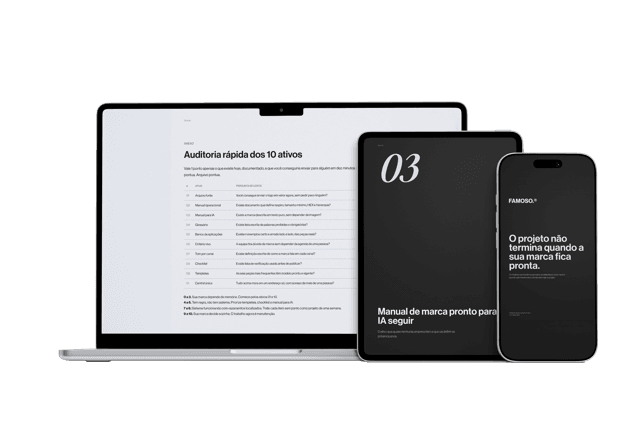
Material gratuito
E se a pessoa que criou sua marca sumisse amanhã?
Os 10 ativos que garantem que sua marca continue consistente, com ou sem quem a desenvolveu.
The difference isn't luck. It's positioning. The second built a perception of authority before contact. The client arrived with the work already done.
4. The most expensive product on the shelf that sells out first
In any category with varied pricing, there's a recurring phenomenon: the most expensive product often has higher turnover than the intermediate one.
Not because people have more money. Because the most expensive product's positioning resolves a doubt the intermediate one doesn't: which is the best? When the client wants the best and doesn't want to make a mistake, they take the most expensive because price works as a quality signal.
Premium price positioning, when supported by adequate perception, doesn't reduce the market. It selects the client.
5. The local company that competes with a multinational without losing clients
There are small companies that compete with large players and lose on price every week. And there are small companies that compete with large players and close projects multinationals can't.
The difference is almost always positioning. The big company sells scale and structure. The small company that knows how to position itself sells attention, personalization, and response speed. It doesn't compete on the same terrain. It occupies a different territory.
The client who wants what the big company offers goes to the big company. The one who wants what it offers goes to it. No dispute.
What these examples have in common
None of them compete on price. All installed a perception before the conversation started. And that perception defines who arrives, with what expectation, and with what willingness to pay.
Positioning isn't what you say about yourself. It's what the market thinks before you say anything.
Perguntas frequentes
Can charging a premium price actually help a business sell more?
Yes. In categories with varied pricing, the most expensive option often has higher turnover than the mid-priced one, because price works as a quality signal for clients who don't want to make a mistake.
Why do some competitors charge more for a similar service?
They built a perception of authority or exclusivity before the client ever made contact, so the conversation exists only to confirm a decision the client already made.
How can a small business compete with a large company without competing on price?
By occupying a different territory instead of the same terrain, for example offering attention, personalization, and response speed where the big company sells scale and structure.
Does brand positioning apply to service businesses, not just products?
Yes. The law firm and freelancer examples show the same principle: the professional who builds perception of authority before contact closes deals with less negotiation than one who sends a proposal and waits.
Material gratuito
E se a pessoa que criou sua marca sumisse amanhã?
Os 10 ativos que garantem que sua marca continue consistente, com ou sem quem a desenvolveu.
Ferramenta gratuita
Diagnóstico de marca
Responda o scorecard e receba o score da sua marca com uma leitura direta do resultado.
Fazer diagnóstico →
R$97
Agente FAMOSO.®
O processo que uso pra criar posts com tese, não conteúdo genérico. Acesso permanente.
Conhecer o agente →Leia também
- What brand positioning is (and why it costs you)Brand positioning isn't a slogan. It's the position your company occupies in the client's mind before any conversation. And it defines the price you can charge.
- Branding strategy: what it is and how it worksBranding strategy isn't about having a nice logo. It's deciding what your brand means and how it's perceived.
- Brand equity: why your brand may be worth moreBrand equity is the value your brand adds beyond the product itself. Understand how it affects price, preference, and growth.
Escrito por Pedro Cardoso, fundador do FAMOSO.®, estúdio de branding em Porto Alegre.
← Ver todos os artigosDiagnóstico FAMOSO.®
Você não vende o que faz. Vende o que parece que faz.
Análise completa da sua marca mais uma call de 30 minutos. O valor vira crédito integral no projeto.
CONHECER O DIAGNÓSTICO