
Does Investing in Brand Pay Off? How to Measure It
Brand has ROI, but it doesn't show up in the same line item or month you pay for it. Where the return actually shows up.
Neste artigo

"What do I get back" is the right question to ask before investing in brand. The problem is that branding was sold for so long as something intangible that it became easy to justify bad spending and easy to dismiss a good investment. Brand does have a return, but it doesn't show up in the same line item or the same month you pay for it.
Whoever treats identity as a cosmetic expense measures it wrong and concludes wrong. Whoever understands brand as what sustains price and reduces selling effort starts seeing the return in the numbers they already track.
Why brand ROI looks invisible
An ad has a trackable return: spent X, got Y leads in, closed Z. Brand doesn't work that way. It doesn't generate the sale, it changes the condition under which every sale happens. That's why the effect spreads across several lines instead of showing up in one.
That doesn't mean it's unmeasurable. It means you measure it by what changes in the business afterward, not by a single vanity metric. A brand that works leaves a trail in price, close rate, acquisition cost, and who comes looking for you. Those numbers you already have.
Where brand return actually shows up
The return on good brand work spreads across concrete fronts.
Price charged. The most direct front. If after repositioning you sustain a higher price without losing volume, the margin difference is pure return, and recurring. A price increase that perception now sustains pays the project back on its own within a few months.
Close rate. A strong brand shortens distrust. The client arrives more convinced, the proposal meets less resistance, you close a bigger share of who you serve. Less sales lost along the way.
Acquisition cost. When the brand does part of the convincing, sales and marketing spend less to bring in the same client. The same ad converts better because it lands on a brand that already inspires trust.
Quality of contact. A well-positioned brand attracts those who compare by value and repels those who just ask about price. Less time spent with people who were never going to pay what you're worth.
How to measure without fooling yourself
Measuring brand ROI means comparing before and after on business metrics, not likes.
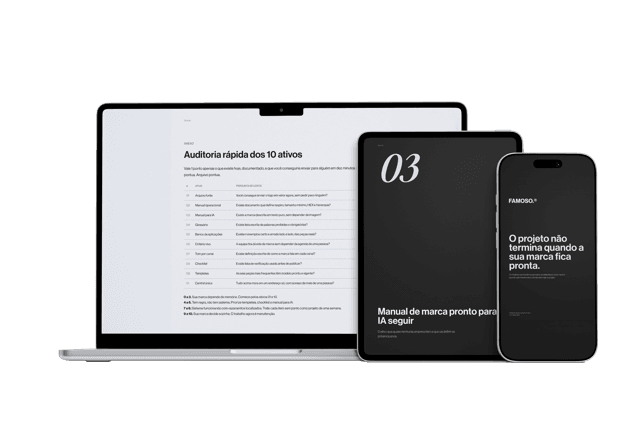
Material gratuito
E se a pessoa que criou sua marca sumisse amanhã?
Os 10 ativos que garantem que sua marca continue consistente, com ou sem quem a desenvolveu.
Set a baseline before you move. Average price, close rate, ticket, acquisition cost, source of your best clients. Without a snapshot of the before, any result afterward becomes opinion.
Give it time. Brand doesn't turn into a number the following month. The effect shows up over quarters, as the market reabsorbs the new perception. Judging it in thirty days is like weighing yourself the day after starting a diet.
Isolate what can be isolated. If the only big change that quarter was the repositioning and the average price rose with stable volume, brand is the most likely explanation. It's not a lab, but it's enough evidence to decide.
A brand diagnosis also serves this purpose: defining where you stand before, so you can measure how far you've moved after.
The cost of not investing is a number too
Brand return has a twin nobody puts in the spreadsheet: the cost of sticking with a weak brand. It exists every month, silently.
It's the price you can't charge. The discount you have to give to close. The sale the worse competitor wins. The ad that converts less because it lands on a brand with no credibility. None of it shows up as an expense, but it's all money left on the table. A weak brand isn't zero cost, it's a diluted cost you pay without seeing it.
Not every brand investment has a return
Being honest about ROI means admitting that brand also loses money when it's done wrong. Swapping the logo on a whim, with no strategy behind it, is expense with no return. Investing in aesthetics that don't change value perception spends money without moving any of the lines that matter.
The return comes from brand tied to positioning, not brand tied to decoration. It's the difference between how much a visual identity that only delivers files costs and a project that delivers a decision about where the brand plays. The first is cost. The second is investment with a traceable return.
Brand does have ROI, but it's not the ROI of an ad, with a number at the end of the week. It's the ROI of an asset: it changes the condition of every sale that follows and pays for itself over time, in bigger margins, easier sales, and better clients. The right question was never "does brand return anything." It was "does this brand, built this way, change what the market accepts paying me." When it does, the return shows up exactly where it matters.
Perguntas frequentes
Does investing in brand really have a return?
Yes, but it doesn't show up in the same line item or the same month you pay for it. The return spreads across price charged, close rate, acquisition cost, and the quality of the contacts that come in.
How long does it take for the return on brand work to show up?
Not the following month. The effect shows up over quarters, as the market reabsorbs the newly built perception.
How do you measure whether investing in brand is paying off?
By setting a baseline before you move, like average price, close rate, ticket, and acquisition cost, and comparing those business metrics afterward, not likes or vanity metrics.
Does every brand investment guarantee a return?
No. Swapping the logo on a whim, with no positioning strategy behind it, is expense with no return. The return comes from brand tied to positioning, not brand tied to decoration.
Material gratuito
E se a pessoa que criou sua marca sumisse amanhã?
Os 10 ativos que garantem que sua marca continue consistente, com ou sem quem a desenvolveu.
Ferramenta gratuita
Diagnóstico de marca
Responda o scorecard e receba o score da sua marca com uma leitura direta do resultado.
Fazer diagnóstico →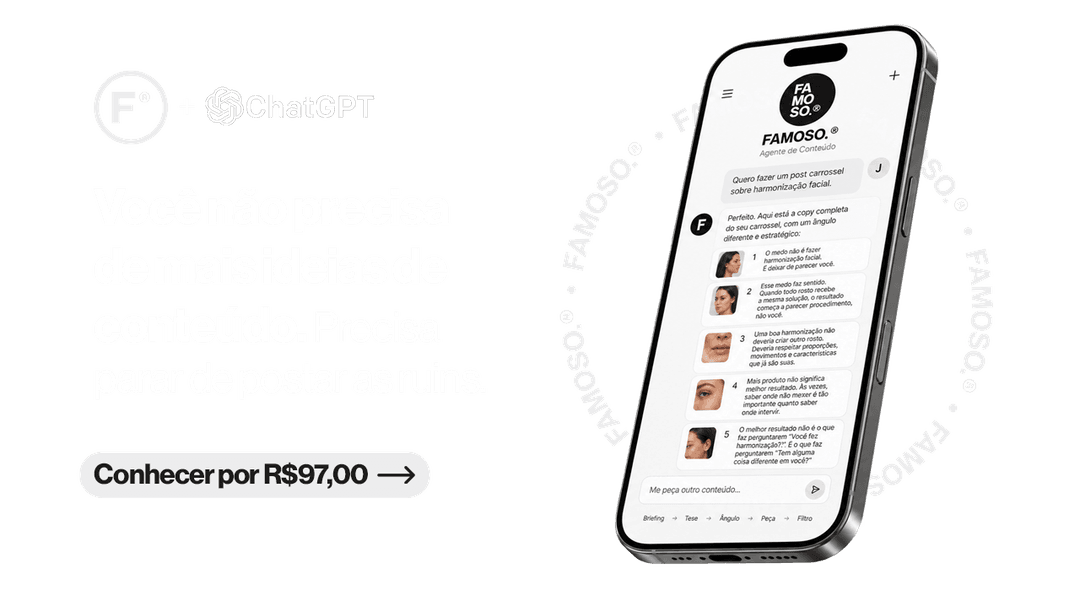
R$97
Agente FAMOSO.®
O processo que uso pra criar posts com tese, não conteúdo genérico. Acesso permanente.
Conhecer o agente →Leia também
- Brand equity: why your brand may be worth moreBrand equity is the value your brand adds beyond the product itself. Understand how it affects price, preference, and growth.
- What Is a Brand Diagnosis and When to Do OneA brand diagnosis is the analysis that shows why a brand looks smaller than the business. Understand what it is, how it works, and when it's worth doing.
- How much does professional visual identity cost?Professional visual identity in Brazil costs between R$3,000 and R$30,000. Understand what separates the three service types.
- Brand repositioning: what it is and how to do itBrand repositioning isn't a visual overhaul. It's changing how the market perceives your business, and how to do it right.
Escrito por Pedro Cardoso, fundador do FAMOSO.®, estúdio de branding em Porto Alegre.
← Ver todos os artigosDiagnóstico FAMOSO.®
Você não vende o que faz. Vende o que parece que faz.
Análise completa da sua marca mais uma call de 30 minutos. O valor vira crédito integral no projeto.
CONHECER O DIAGNÓSTICO