
What Spider-Man's reboot teaches about branding
Hollywood reboots Spider-Man every few years. Brands get rebooted too, and it resets perception. When starting over helps and when it erases what you built.
Neste artigo

On July 29, 2026 another Spider-Man chapter arrived in theaters. It is not the character's first restart, and it probably will not be the last. Since 2002 Hollywood has presented three different film incarnations of the same hero, with different actors, tones and universes, in a span of a little over twenty years.
That has a name in branding: a reboot. Restart a known asset, keep the name and the core, swap almost everything else, and hope to win the audience back. Companies do this constantly, they just call it something else. Understanding why Hollywood reboots Spider-Man explains why so much corporate rebranding fails.
Reboots work because perception gets stuck
Spider-Man gets rebooted when the previous version wears out: box office falls, the audience associates the brand with a tired film, perception locks into a bad place. The reboot exists to erase that association and start clean. It is exactly the calculation of a company that rebrands because the market sees it as dated, cheap or irrelevant, and small adjustments will not move that perception.
In those cases, starting over is the right call. When accumulated perception is a liability rather than an asset, preserving it makes no sense. That was the reasoning behind several redesigns that rescued brands trapped in an image that no longer sold. The reset is expensive, but the liability was bigger.
The catch is that a reboot only pays off when there is a liability to erase. This is where most companies get the math wrong.
The hidden cost: you throw away recognition
Every Spider-Man reboot starts from zero in one respect: the audience has to be reintroduced to the character, accept a new face, relearn the rules of that universe. The franchise can afford it because the name Spider-Man carries almost a century of recognition no reboot can erase. The central symbol is too strong to die.
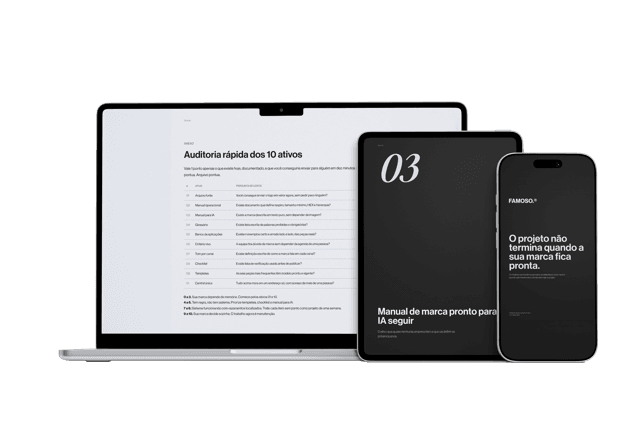
Material gratuito
E se a pessoa que criou sua marca sumisse amanhã?
Os 10 ativos que garantem que sua marca continue consistente, com ou sem quem a desenvolveu.
Your company has no such protection. When you restart the brand (new name, new logo, new tone, new promise) without a real liability to erase, you are not fixing bad perception. You are throwing away the recognition you already had and forcing the customer to relearn you from scratch, as if you were a new competitor. The reset that was supposed to help becomes self-imposed amnesia.
The fear behind many premature reboots is the same one that drives the market around franchises afraid of going obsolete. The owner confuses personal boredom with market fatigue. He looks at the brand every day and gets sick of it. The customer, who sees it occasionally, is still only starting to memorize it. Restarting at that point interrupts construction halfway through.
The question that decides whether you should restart
Before any fresh start, there is one calculation: is what the market associates with your brand today an asset or a liability.
If people recognize you and think something good (or neutral), restarting destroys value. The right move is to adjust, not restart: tighten consistency, refine the message, keep the signals that already stuck. If people recognize you and think something that blocks growth (cheap, outdated, untrustworthy), and you have already tried to correct it without success, then the reboot pays for itself, because what you erase is worth less than what you gain.
And if people barely recognize you at all, the problem is not the brand, it is the lack of presence. Restarting here is the worst of both worlds: you reset a recognition that did not exist yet and begin again a construction that was never finished. What is missing is not a reboot, it is repetition.
Hollywood reboots Spider-Man because the name is strong enough to survive any reset. Your brand is probably still building that strength. Before starting from zero, check whether what you have is a liability to erase or an asset to protect. When in doubt, it is an asset.
Perguntas frequentes
What is a brand reboot?
It means restarting a known asset while keeping the name and the core, but swapping almost everything else (visuals, tone, promise) to win the audience back. It is the corporate equivalent of rebooting a film franchise like Spider-Man.
When is restarting a brand worth it?
When accumulated perception is a liability rather than an asset: the market recognizes the brand but associates it with something that blocks growth (cheap, dated, untrustworthy) and smaller adjustments have already failed. Then the reset pays because what is erased is worth less than what is gained.
What is the risk of restarting a brand too early?
Throwing away existing recognition and forcing customers to relearn the brand from scratch, as if it were a new competitor. With no real liability to erase, the reboot becomes self-imposed amnesia that destroys value.
How do I know whether to restart or just adjust my brand?
Ask what the market associates with your brand today. If it is good or neutral, adjust instead of restarting. If it is bad and you have already tried to fix it, restart. If people barely recognize you, the problem is lack of presence, and the answer is repetition, not a reboot.
Material gratuito
E se a pessoa que criou sua marca sumisse amanhã?
Os 10 ativos que garantem que sua marca continue consistente, com ou sem quem a desenvolveu.
Ferramenta gratuita
Diagnóstico de marca
Responda o scorecard e receba o score da sua marca com uma leitura direta do resultado.
Fazer diagnóstico →
R$97
Agente FAMOSO.®
O processo que uso pra criar posts com tese, não conteúdo genérico. Acesso permanente.
Conhecer o agente →Leia também
- Toy Story 5 and the fear every brand hasA tablet threatens the toys on screen, and off screen the franchise breaks box office records. Toy Story 5 is a masterclass in relevance and brand equity.
- What is rebranding, really?Rebranding isn't changing the logo. It's realigning perception with the level the business has already reached.
- Brand redesign: when it's worth itBrand redesign isn't about liking your logo more. It's about correcting what your perception is communicating wrong.
- Brand equity: why your brand may be worth moreBrand equity is the value your brand adds beyond the product itself. Understand how it affects price, preference, and growth.
Escrito por Pedro Cardoso, fundador do FAMOSO.®, estúdio de branding em Porto Alegre.
← Ver todos os artigosDiagnóstico FAMOSO.®
Você não vende o que faz. Vende o que parece que faz.
Análise completa da sua marca mais uma call de 30 minutos. O valor vira crédito integral no projeto.
CONHECER O DIAGNÓSTICO