
AI Generates Assets, But Doesn't Decide Positioning
Claude writes a manifesto, generates a palette, drafts copy in seconds. What it doesn't do alone: decide positioning.
Neste artigo
Claude writes a brand manifesto in seconds. It generates forty palette variations before you finish your coffee. It drafts institutional copy, organizes a brief, summarizes competitor research. All of that is real, and it's already changed the pace of work at any branding studio. What it doesn't do alone is decide which of those forty variations is right for that specific business. That's still human judgment.
What generative AI does well in the design process
Quick concept drafts, variation exploration, institutional copywriting, reference organization, a first read of a confusing brief. Work that used to take a full day of manual effort now takes minutes. This isn't a threat, it's a tool. Anyone who works with brand every day knows that the mechanical part of the process, the one that consumed the most time without adding any real decision-making, is exactly what AI handles best.
Why AI output tends to be generic without human direction
A language model learns from the average of what already exists. Without specific instruction, its natural tendency is to converge on whatever is most common, most seen, most repeated. That's why a vague prompt like create a modern, minimalist visual identity tends to hand back the same aesthetic any other company gets with the same vague prompt: similar font, similar gradient, similar composition. The tool isn't wrong, it's doing exactly what it was asked to do. The problem is that modern and minimalist isn't positioning, it's a generic adjective, and a generic adjective produces a generic result, with or without AI in the mix.
Positioning is a business decision, not a prompt
Material gratuito
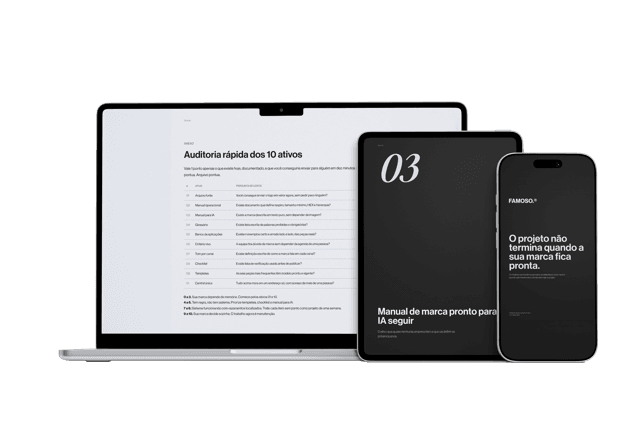
E se a pessoa que criou sua marca sumisse amanhã?
Os 10 ativos que garantem que sua marca continue consistente, com ou sem quem a desenvolveu.
Deciding whether a brand should look premium or accessible, serious or playful, whether it should compete on price or on perception, requires knowing things no prompt contains: who the direct competitor is, how much the market tolerates paying, what the ideal client already associates with that type of business, what the company can actually sustain once the brand goes live. That's research, that's a conversation with whoever decides, that's a reading of context the tool doesn't have access to on its own. AI can organize that information once it's collected. It doesn't decide what to do with it alone.
Where that leaves anyone hiring a branding studio
Before long, any business will have access to the same AI tool a studio uses. The difference won't be who knows how to operate Claude, that becomes a commodity fast. It'll be who has a thesis to feed the tool with clear direction, instead of a vague request. Here at the studio, AI speeds up drafting and execution, but the decision about which perception that brand needs to build stays the work of whoever understands the business behind it, not whoever wrote the prettiest prompt.
The tool got better. The question that decides the result is still the same one as always: what does this brand need the market to perceive in it.
Perguntas frequentes
Does generative AI like Claude replace a branding studio?
No. It speeds up concept drafts, palette variations, and copywriting, but it doesn't decide alone which direction is right for that specific business. That's still human judgment.
Why does generative AI output tend to look generic?
Because a language model learns from the average of what already exists. A vague prompt, like a modern, minimalist identity, tends to hand back the same aesthetic any other company also got with the same vague prompt.
Can AI decide a brand's positioning on its own?
No. Deciding whether a brand should look premium or accessible requires research, a conversation with whoever decides, and a reading of context the tool doesn't have access to on its own.
If everyone will have access to the same AI, what still sets a branding studio apart?
Having a clear thesis to feed the tool with specific direction, instead of a vague request. Knowing how to operate the AI becomes a commodity fast; understanding the business behind the brand doesn't.
Material gratuito
E se a pessoa que criou sua marca sumisse amanhã?
Os 10 ativos que garantem que sua marca continue consistente, com ou sem quem a desenvolveu.
Ferramenta gratuita
Diagnóstico de marca
Responda o scorecard e receba o score da sua marca com uma leitura direta do resultado.
Fazer diagnóstico →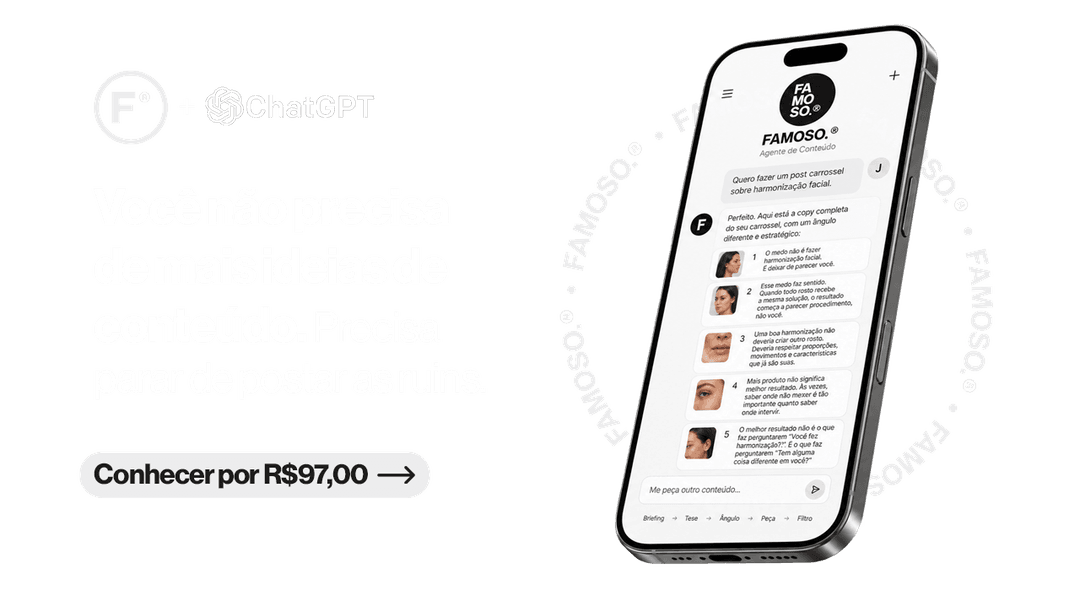
R$97
Agente FAMOSO.®
O processo que uso pra criar posts com tese, não conteúdo genérico. Acesso permanente.
Conhecer o agente →Leia também
- AI-generated logos: the risk nobody tells you aboutAn AI-generated logo is fast and cheap, but the bigger risk isn't aesthetic, it's legal, before you use one.
- Visual identity creation: how it actually worksMost people think creating a visual identity means showing logo options until one sticks. It's not. See how the real process works, from foundation to delivery.
- What is visual identity, really?Visual identity is what makes your brand perceived a specific way before a word is said. Most companies treat it as just the logo.
- Why every AI startup has the same logoGradient, spark, lowercase wordmark, blue-purple. Open ten artificial intelligence brands and you'll see almost the same design. Looking alike has a cost.
Escrito por Pedro Cardoso, fundador do FAMOSO.®, estúdio de branding em Porto Alegre.
← Ver todos os artigosDiagnóstico FAMOSO.®
Você não vende o que faz. Vende o que parece que faz.
Análise completa da sua marca mais uma call de 30 minutos. O valor vira crédito integral no projeto.
CONHECER O DIAGNÓSTICO