
How many hours does Haaland sleep? The full routine
Haaland sleeps around ten hours a night, eats 6,000 calories a day and tapes his mouth shut. The whole routine, and why repetition became his brand.
Neste artigo
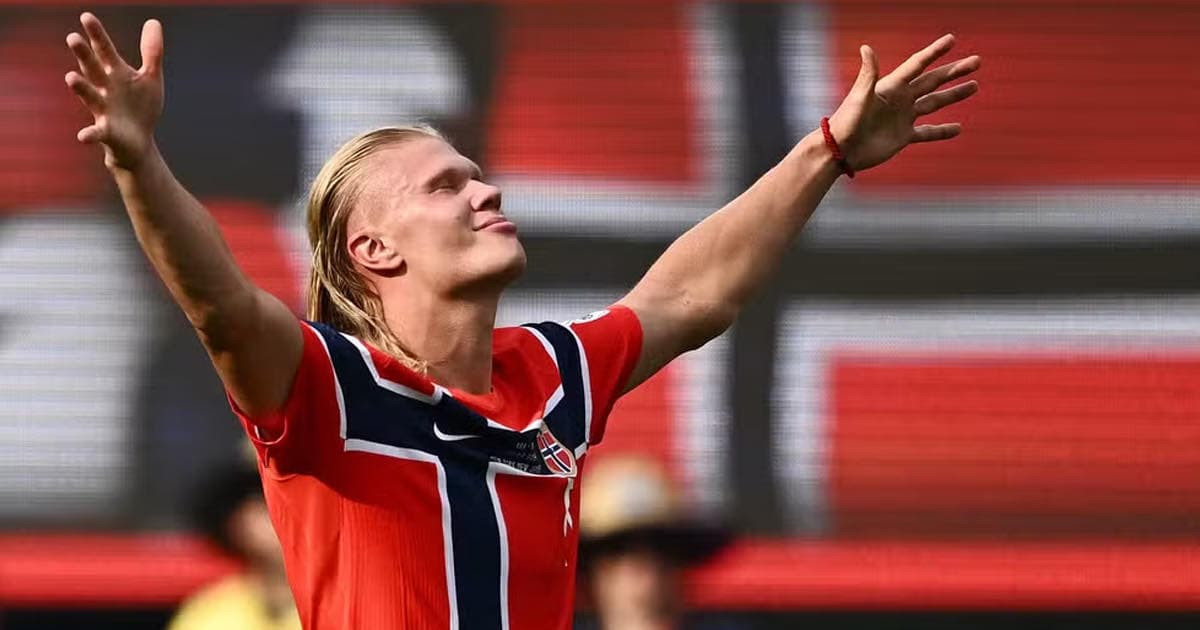
Erling Haaland sleeps about ten hours a night and tapes his mouth shut to make sure he breathes only through his nose. He eats about 6,000 calories a day, nearly triple what a normal adult eats. He alternates ice baths with sauna and a hypoxic chamber. None of this is spontaneous. It's a routine repeated every day, year after year. Football's strongest personal brand right now wasn't built with appearances. It was built with repetition.
The meditation pose that became a signature, until it stopped being one
In 2019, still at Borussia Dortmund, Haaland started celebrating goals by sitting on the grass in a meditation pose. He said at the time he loved meditating, that the practice brought him calm. Every goal, the same pose. It became recognizable to the point that any fan could identify the player by the gesture alone, without seeing his face. When he moved to England, he swapped the celebration. That specific gesture didn't last forever, but the principle behind it still holds: what made that pose a signature wasn't originality. It was being exactly the same, goal after goal, with no variation, until it became a recognizable signal on its own.
A 6,000-calorie diet and ten hours of sleep aren't a backstage detail, they're policy
None of these routines is glamorous enough to make flashy sponsorship content. Sleeping early, eating protein, taking cold baths, that's not magazine-cover material. But it's what sustains what shows up on the pitch: goal after goal, season after season. The perception of being the world's best number 9 isn't born from narrative management. It's born from delivering the same extreme result with a consistency nobody else sustains.
His sponsorships follow the same logic
Haaland doesn't avoid advertising deals, he makes about US$20 million a year from them alone. But the portfolio is lean and coherent: Nike, with a ten-year deal signed in 2023, Breitling, Electronic Arts, Visa, Dolce & Gabbana. Brands with serious positioning, with no image overlap between them, no short-term contract forcing a repositioning every six months. A ten-year deal with Nike isn't a bet on passing hype, it's a bet on an image that doesn't change direction. That's brand architecture applied to a person: few elements, chosen to reinforce the same thing, not to compete with each other.
What this teaches an ordinary business's brand
A founder who switches positioning with every campaign, changes tone with every post, tries a new visual identity every year, doesn't build recognition, builds noise. Brand perception doesn't come from how many times it shows up. It comes from how many times it shows up exactly the same. The same promise, the same tone, the same visual signal, repeated until they become a mental shortcut for whoever's looking from outside. Haaland isn't remembered for showing up a lot. He's remembered because, every time he shows up, it's always the same thing, just better executed than the time before.
Perguntas frequentes
What does Erling Haaland's routine teach about building a personal brand?
That football's strongest personal brand right now wasn't built with appearances, it was built with repetition: the same routine and the same signal, repeated every day, year after year.
Why did Haaland's goal celebration become a recognizable signature?
Because it stayed exactly the same, goal after goal, with no variation, until it became a recognizable signal on its own, even after he switched celebrations when he changed clubs.
Do Haaland's sponsorships follow any brand logic?
Yes. The portfolio is lean and coherent, with Nike, Breitling, Electronic Arts, Visa, and Dolce & Gabbana, long contracts with no image overlap between them.
What can a founder learn from Haaland's consistency?
That brand perception doesn't come from how often it shows up, it comes from how often it shows up exactly the same, until it becomes a mental shortcut for whoever's looking from outside.
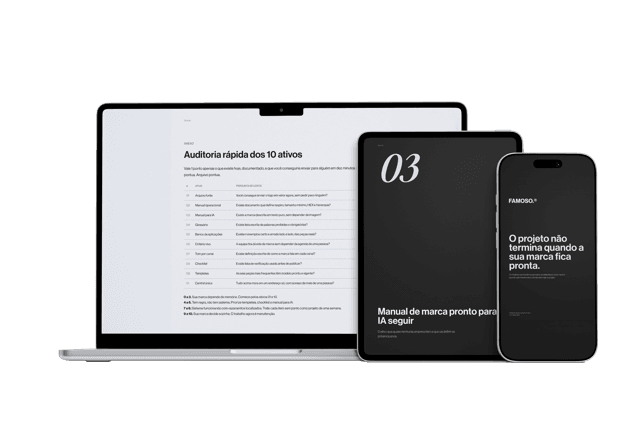
Material gratuito
E se a pessoa que criou sua marca sumisse amanhã?
Os 10 ativos que garantem que sua marca continue consistente, com ou sem quem a desenvolveu.
Ferramenta gratuita
Diagnóstico de marca
Responda o scorecard e receba o score da sua marca com uma leitura direta do resultado.
Fazer diagnóstico →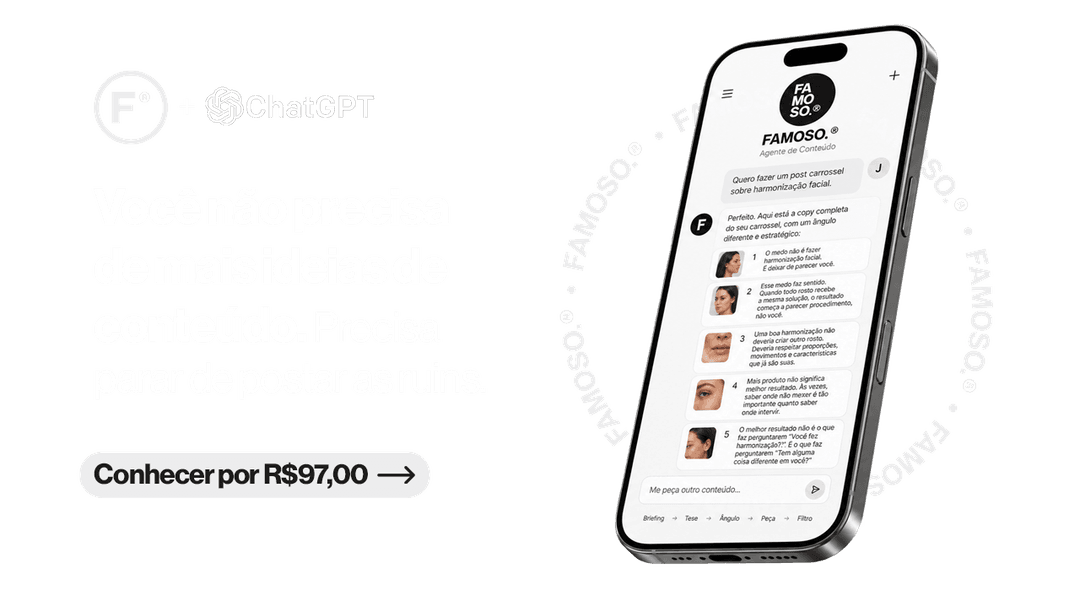
R$97
Agente FAMOSO.®
O processo que uso pra criar posts com tese, não conteúdo genérico. Acesso permanente.
Conhecer o agente →Leia também
- Personal branding: authority isn't vanityA founder who doesn't build a personal brand leaves the perception of their own expertise to chance. Personal branding is a business decision, not vanity.
- Brand tone of voice: what it is and how to define yoursBrand tone of voice is your company's personality expressed in words. Understand what it is, why it matters, and how to define yours with clarity.
- Brand equity: why your brand may be worth moreBrand equity is the value your brand adds beyond the product itself. Understand how it affects price, preference, and growth.
- Messi vs. Cristiano Ronaldo: Two Personal BrandsBoth reached the top through opposite paths. One let performance speak, the other ran his image like a company.
- Ronaldinho's last match: September 2015, FluminenseRonaldinho last played professionally in 2015 and retired in 2018. Eleven years on, the brand is worth around R$600M. What kept paying without the game.
Escrito por Pedro Cardoso, fundador do FAMOSO.®, estúdio de branding em Porto Alegre.
← Ver todos os artigosDiagnóstico FAMOSO.®
Você não vende o que faz. Vende o que parece que faz.
Análise completa da sua marca mais uma call de 30 minutos. O valor vira crédito integral no projeto.
CONHECER O DIAGNÓSTICO