
Asking for brand opinions always backfires
A poll in stories, a team vote, the family group chat. Every consultation picks the most familiar option, and the most familiar is what the market already has.
Neste artigo
You got the new brand proposal, hesitated, and did what feels responsible: put the options in your stories, sent them to the family group, asked the team at Monday's meeting. Thirty-four people voted. Option B won.
Option B is the one most similar to what you already had. It always is.
Consultation does not measure quality, it measures familiarity
This has had a name in psychology since 1968, when Robert Zajonc described the mere exposure effect: we prefer what we have seen before, even without knowing we have seen it. Repetition creates comfort, comfort turns into preference, and the person swears they chose on merit.
When you ask for opinions about a brand, that is what you are measuring. Not which one works better, but which one feels least strange right now. The winning option is the one that demands least from the eye looking at it.
The problem is that repositioning exists precisely to cause controlled strangeness. If the new brand bothers nobody, it probably will not shift anybody's perception either.
The case that should have settled this in 1985
Coca-Cola tested its new formula with roughly 190,000 consumers in blind tests. The new formula beat the old one and beat Pepsi. With that data in hand, the company launched New Coke in April 1985.
Seventy-nine days later the old formula was back on the shelves.
The research was not technically wrong. It measured taste preference in an isolated sip, which was the question asked. What it could not measure was what people felt about the brand, the label and the ritual. The right answer to the wrong question cost one of the world's biggest brands two and a half months.
Your stories poll has exactly the same defect, with an infinitely worse sample.
Who you are actually asking
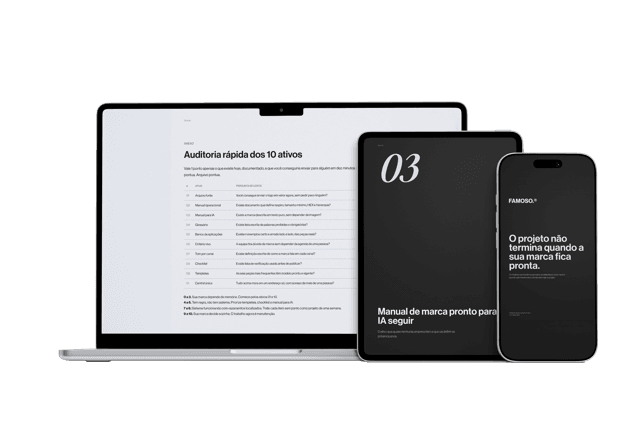
Material gratuito
E se a pessoa que criou sua marca sumisse amanhã?
Os 10 ativos que garantem que sua marca continue consistente, com ou sem quem a desenvolveu.
Look at who answers the poll: followers who already follow you, and therefore are already used to the current look. Employees, who live with the brand every day and have an interest in nothing changing. Family, who want to please you.
None of those groups is the customer you want to attract and who does not know you yet. You are asking people who already came in to evaluate the storefront meant for people who have not.
There is also the herd effect: in a public poll, the first votes pull the following ones. After ten votes the thing is decided, and the rest just confirms it.
What to do instead
This is not about deciding alone in the dark. It is about changing the question and changing the method.
- →Define the criteria before seeing any proposal: what this brand needs to communicate, to whom, against which competitors, and where it will appear. Written criteria are what stop the discussion from becoming taste.
- →Approve against criteria, not preference. The right question is not do you like it. It is does this communicate what we decided it needs to communicate, better than what we have today.
- →If you do test with people, test the right thing: recognition (do you remember where you saw this), association (what kind of company do you think this is), perceived price (how much do you imagine this costs). Never preference between options.
- →Test with people who do not know you. The goal is winning new customers, and a new customer is the only one who sees the brand as it actually appears.
- →Shrink the committee. A brand approved by ten people is a brand with no edges, and edges are the only thing that makes anyone remember you.
The symptom that shows up later
A brand chosen by vote almost always becomes that safe thing nobody hates and nobody mentions. It works to avoid internal friction, and it is terrible at creating external preference.
Then the usual happens: the material is finished, the company is still compared on price, and the wrong conclusion is that branding does not work. It worked. What got approved was not the proposed brand, it was the group's consensus.
Whoever decides by consensus is buying comfort. Perception moves with decision.
Perguntas frequentes
Why does a vote always pick the option closest to the current brand?
Because of the mere exposure effect, described by Robert Zajonc in 1968: people prefer what they have already seen. A poll measures familiarity, not effectiveness.
What does the New Coke case prove?
That well-run research answers exactly the question it was asked. The blind test with roughly 190,000 consumers measured taste in an isolated sip and ignored the bond with the brand. The old formula returned 79 days after launch.
Is it never worth asking customers about the brand?
It is, as long as the question changes. Test recognition, association and perceived price, with people who are not customers yet. Preference between options does not work.
How do I approve a visual identity without falling into personal taste?
By writing the criteria before seeing the proposals: what to communicate, to whom, against whom and where. Approval then becomes a comparison against those criteria.
Material gratuito
E se a pessoa que criou sua marca sumisse amanhã?
Os 10 ativos que garantem que sua marca continue consistente, com ou sem quem a desenvolveu.
Ferramenta gratuita
Diagnóstico de marca
Responda o scorecard e receba o score da sua marca com uma leitura direta do resultado.
Fazer diagnóstico →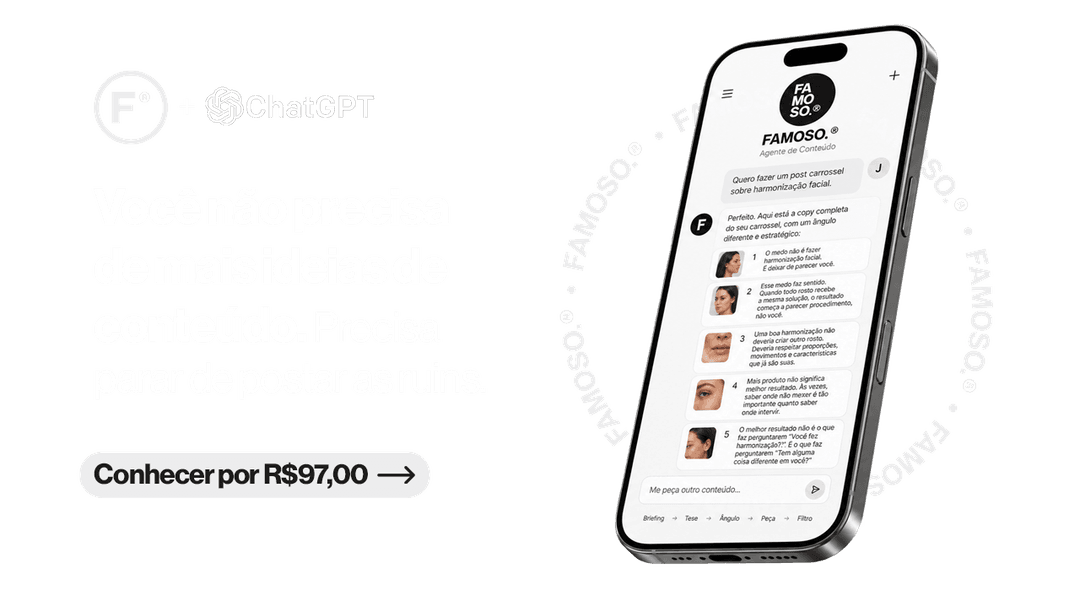
R$97
Agente FAMOSO.®
O processo que uso pra criar posts com tese, não conteúdo genérico. Acesso permanente.
Conhecer o agente →Leia também
- Visual identity creation: how it actually worksMost people think creating a visual identity means showing logo options until one sticks. It's not. See how the real process works, from foundation to delivery.
- What is visual identity, really?Visual identity is what makes your brand perceived a specific way before a word is said. Most companies treat it as just the logo.
- Why Your Brand Looks Amateur (and How to Fix It)Does your brand look amateur even though your business is serious? See the signs that make a brand look smaller than it is and what changes in perception.
- Brand redesign: when it's worth itBrand redesign isn't about liking your logo more. It's about correcting what your perception is communicating wrong.
Escrito por Pedro Cardoso, fundador do FAMOSO.®, estúdio de branding em Porto Alegre.
← Ver todos os artigosDiagnóstico FAMOSO.®
Você não vende o que faz. Vende o que parece que faz.
Análise completa da sua marca mais uma call de 30 minutos. O valor vira crédito integral no projeto.
CONHECER O DIAGNÓSTICO